
Safety boots are footwear designed to provide protection for your feet to prevent injuries while at work. If safety boots are required, it will be described in the uniform section for the shift you are working.
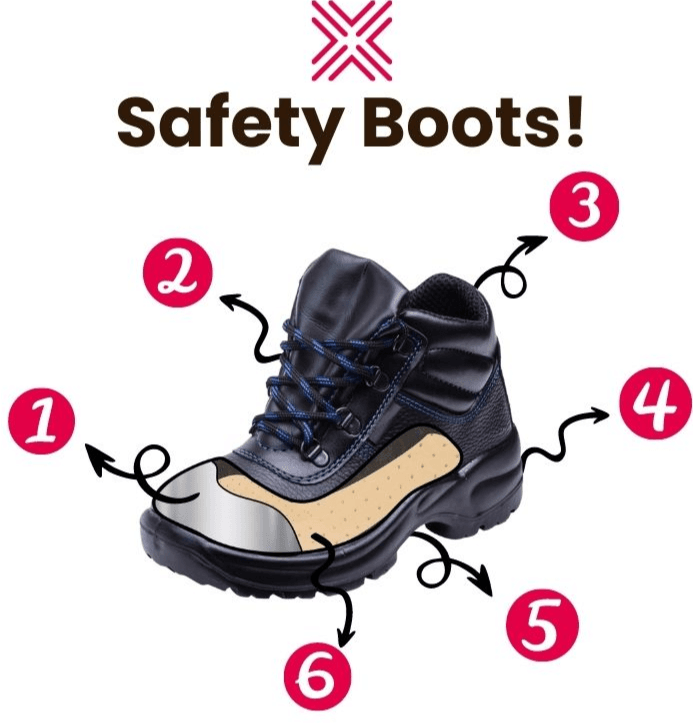
Please see the below a basic outline to safety boots.
- Toe Cap - It is vital a pair of safety boots have a reinforced cap that should withstand a minimum of 100 joules. These will protect your feet from being crushed or injured.
- Upper - Safety boots need a stable outer layer to prevent foot injuries caused by sharp objects. We recommend a leather as it is a much more stable material in comparison to other shoes and offers greater protection against hazards.
- Lining - Most linings in safety boots are made from materials such as leather, cotton or wool. You will be working on your feet for long hours so it’s important the lining of the shoes are comfortable. It is important the material allows breathability, absorbs moisture and dries quickly.
- Shock absorbing heel - Some safety shoes provide protection by absorbing high Impact on the heel and ball of the foot.
- Grip Sole - High levels of grip onto surfaces to prevent injuries to slips.
- Insole - Most insoles are made from leather or wool. The insole is designed to offer protection for the feet as well as comfort as you will be on your feet for long hours.
Safety Factor
SB | A toe cap capable of withstanding an impact up to 200 joules. This is the basic level for safety footwear.
S1 | A toe cap capable of withstanding an impact up to 200 joules as well as a fully enclosed heel and anti-static properties within the sole.
S2 | A toe cap capable of withstanding an impact up to 200 joules as well as a fully enclosed heel, anti-static properties and water resistant.
S3 | The same as S2 plus penetration resistance and a cleated sole.
S4 | 200 joule toe cap protection and all rubber or polymeric outsole and upper with anti-static properties and energy absorbing insole.
S5 | The same as S4 plus penetration resistance and cleated outsole.
Shifts where you will be required to wear safety boots:
Kitchen Porter:
More information available here: Kitchen Porter:
Logistics Porter:
More information available here: Logistics Porter: